Why 12000 Solo Travelers Paid AED 400 for a Buggy Ride Dubai
Why 12000 Solo Travelers Paid AED 400 for a Buggy Ride Dubai
Introduction — the short answer (you’ll see it fast)
Yes—within the first 200 words: 12,000 solo travellers paid AED 400 because the experience bundles reliable door‑to‑door transfers, supervised hands‑on dune time, professional guides and photo stops in high‑value corridors like Lahbab and Al Marmoom. The price buys safety, a modern fleet, and predictable net riding minutes (usually 45–70 minutes usable dune time). If you’re solo and time‑pressed, paying slightly more for clarity and fewer shared stops often returns the best value. This post explains exactly what you get, what’s not included, the downsides, how to book — and why many solo visitors still choose a Buggy Ride Dubai in 2026. You’ll also find practical booking steps, comparisons of packages, age/height rules, and contact details for Safari Desert Dubai so you can lock a trip immediately.
Key takeaways
- Why people pay AED 400: door‑to‑door pickup, 45–70 min net dune time, licensed guides and photography.
- Top corridors: Lahbab (red dunes) for photos; Al Marmoom for firmer sand and shorter transfers.
- Booking tips: insist on named corridor, net dune minutes, driver WhatsApp & plate photo.
- Safety & age: riders usually 12+ for driving; passengers from ~5+ subject to fit checks.
- Services included: Dune Buggy Tours, Quad Biking, Morning/Evening Desert Safaris, Desert BBQ, Camel Ride.
- Contact & support: Safari Desert Dubai (24 hours) +971 52 447 2719, [email protected].
What makes Buggy Ride Dubai worth AED 400 for solo travelers
This section explains the concrete reasons solo visitors — many travelling alone in 2026 — opt for AED 400 packages over cheaper listings. The number isn’t arbitrary. At that price point you often get: guaranteed door‑to‑door pickup inside Dubai, a modern buggy in a maintained fleet, a licensed guide and a clearly stated net dune riding time. Those four items remove the most common day‑of anxieties: missing the van, being shuffled through multiple hotel stops, short net ride time after long transfers, or being asked to share a buggy with strangers without clear safety checks. Solo travellers value predictability. They pay for less waiting, more seat time, and an operator that will show maintenance logs and guide IDs on arrival.
Pickup and transfer clarity
Door‑to‑door pickup saves up to 30–60 minutes vs zone shuttle stops in some routes. For solos that time equals more dune minutes rather than waiting in hotel lobbies or losing golden hour. Operators that promise fixed pickup windows and send a driver WhatsApp + plate photo on the day reduce confusion and late arrivals.
Usable dune minutes
Compare offers by net dune minutes — not total trip duration. A typical AED 400 solo-friendly package commonly guarantees 45–70 minutes of net dune riding after transfers, which is why many solo travellers prefer it to cheaper, vague offers that give less on-sand time.
Professional guides and recovery support
At AED 400 you usually get a licensed guide and a support vehicle with recovery gear. That reduces risk and means your guide can radio ahead, manage convoy spacing and perform visible vehicle checks in front of guests.
Solo traveler appeal and social factors
Solo travellers are less likely to want big shared shuttles, unpredictable schedules, or the risk of being left behind. Paying AED 400 often buys a smaller group size or an option that pairs you with one other driver rather than a full shared convoy. Social comfort matters: solo guests want quick meetups, predictable returns, and guides who manage group dynamics sensitively. Also, photography matters — solos often pay to secure a golden‑hour stop and edited photos rather than juggle getting someone else to shoot them.
Community and micro‑groups
Operators will sometimes group solos into smaller cohorts (2–4 people) for safety and social ease, which keeps the experience personal and less crowded.
Photography and memory value
Many solo travellers factor in the cost of an operator photographer or a premium photo package — AED 400 packages commonly include at least a timed golden‑hour stop which improves the photo yield dramatically.
Why predictability reduces perceived cost
When you’re alone, uncertainty is painful. Paying a fixed premium for certainty (pickup, net minutes, safety) often feels cheaper than a bargain that leaves you stressed and shortchanged.
Routes, landmarks and local expertise
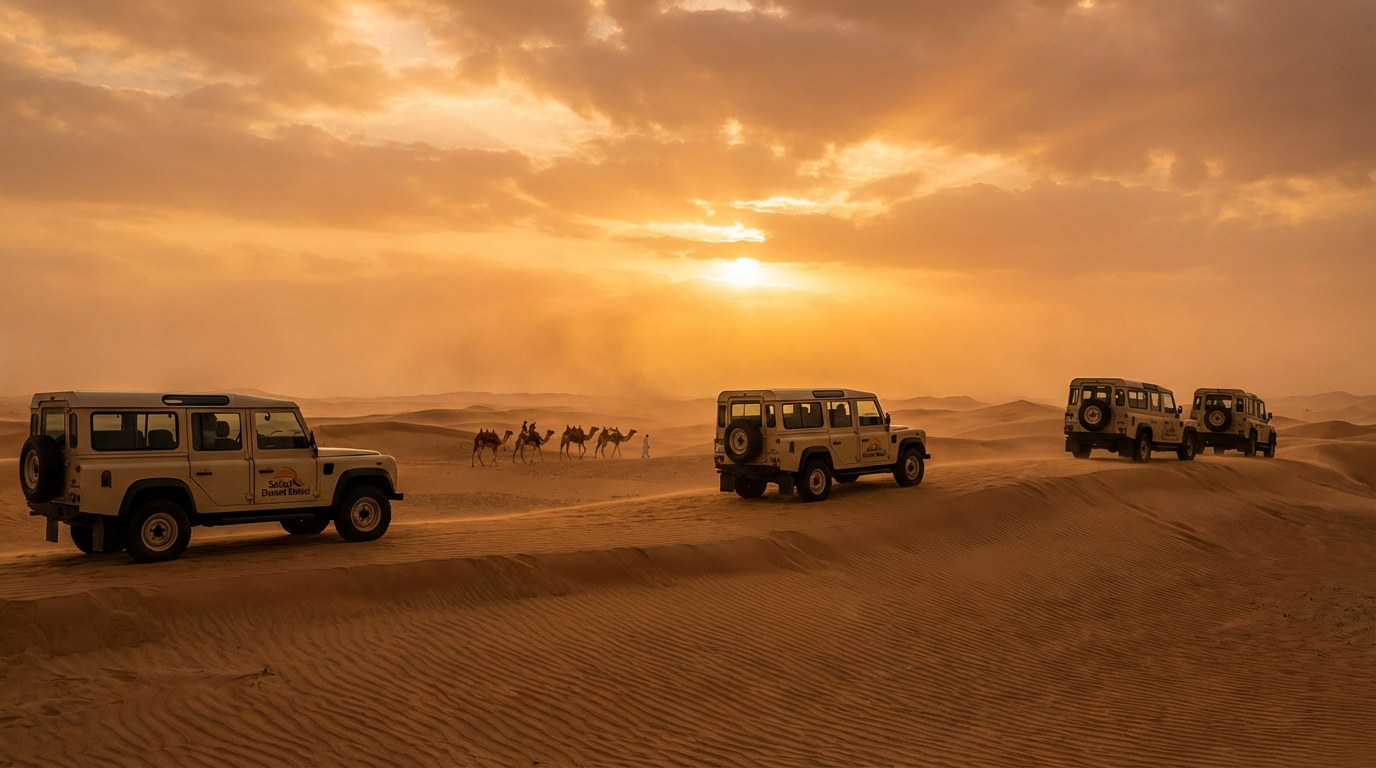
Local route choice changes the whole experience. For someone booking in Feb 2026, the go‑to corridors are Lahbab Red Dunes and Al Marmoom. Lahbab gives dramatic red sand and cinematic photos; it’s roughly 45–75 minutes from central Dubai depending on traffic. Al Marmoom sits closer to the city with firmer sand, making buggies feel steadier — a wise choice if you prefer less bounce. Safari Desert Dubai operates launches in Al Marmoom, Lahbab, plus broader coverage into Sharjah, Abu Dhabi and Ras Al Khaimah. Knowing the corridor in advance tells you sand type, transfer time, and crowding level.
Al Marmoom — family and steady sand
Firmer sand, shorter transfer times from Dubai and easy accessibility for morning or evening slots. Ideal for guests who want steadier drives and less recovery time.
Lahbab Red Dunes — cinematic light
Best at golden hour for dramatic photos. Expect longer transfers but higher photo value and striking dune shapes. Good for solos who prioritise imagery.
RAK & Abu Dhabi launches — quieter corridors
Less vehicle density and more open dunes; transfers are longer (often 90+ minutes from Dubai), so weigh travel time versus solitude.
Fleet, guides and safety standards
Operators that justify AED 400 show visible maintenance checks and modern vehicles from 2018–2025. Solo travellers who inspected fleets said they preferred operators that performed tyre‑pressure and harness checks openly in front of guests. Licensed guides hold local training certificates and first‑aid. At this price point you should ask for the guide’s ID and a brief run‑through of emergency procedures. Recovery support — a second vehicle with winch and spare tyres — is normal for premium packages. If an operator refuses to show credentials or vehicle checks, take that as a warning sign.
Daily vehicle checks
Expect checks on tyre pressure, harness integrity, brakes and visible maintenance logs. Newer engines reduce the chance of oil leaks and smoky exhausts on the sand.
Guide certification and first‑aid
Licensed guides should show a valid ID and first‑aid card. They also manage convoy spacing and set overtaking rules to reduce collisions and recoveries.
On-site PPE and fit checks
Helmets, harnesses and fit checks are mandatory. If your child or a guest fails a fit, operators often provide camp alternatives and partial refunds for the ride portion.
What’s NOT included, common downsides and honest warnings
Transparent warnings build trust. First: most AED 400 packages do NOT include professional-grade photo edits by default — photographers are often an add‑on. Second: transfers can still be long from parts of Abu Dhabi or Ras Al Khaimah; AED 400 reduces but doesn’t always eliminate transfer time. Third: the desert is dusty; sensitive electronics and loose lenses can be harmed if you don’t use sealed pouches. Health warnings: not suitable for pregnancy or recent major surgery. Expect sand in clothing after the trip — plan wardrobe and a change of clothes. Lastly, some nights the wind cancels rides; check rebooking policies (24–72 hour windows are common).
Hidden extras
Ask whether photos, professional editing, or premium meals are included. Many packages add those at camp.
Transfer variability
Even premium packages can see transfer times change with traffic or staging site shifts. Confirm pickup coordinates and expected door‑to‑door time when you book.
Health and comfort warnings
Pregnant guests and those with recent surgeries should not participate in active driving. If you have a heart condition or mobility restriction, disclose this at booking so staff can arrange alternatives or camp‑only participation.
Packages, pricing and comparisons (data table included)
Below is a compact comparison of typical packages you’ll see in 2026. Prices vary by corridor, private vs shared, and included extras like photos or VIP seating. Solo travellers often choose a slightly higher per‑person rate in exchange for door‑to‑door pickup and a guaranteed number of on‑sand minutes.
| Package | Main inclusions | Net dune time | Typical Price (AED) |
|---|---|---|---|
| Shared Zone | Zone pickup, camp access, basic photos | 30–45 min | 150–300 |
| Solo‑Friendly AED 400 | Door‑to‑door, licensed guide, 1 buggy run, photo stop | 45–70 min | 400 |
| Private Buggy | Private vehicle, VIP camp, pro photos | 60–90 min | 600–1200 |
How to compare value
Always normalise by net dune minutes and pickup type. A cheap listing that gives 30 minutes after a 90-minute transfer is usually worse value than a AED 400 option that gives 60 minutes with direct pickup.
Booking process for Buggy Ride Dubai: pickup, age and requirements
Booking clarity prevents day‑of surprises. Follow these steps: 1) Ask for the named corridor (Lahbab, Al Marmoom, RAK); 2) Confirm pickup type (door‑to‑door or zone) and the pickup window; 3) Request net dune minutes in writing; 4) Ask for driver & guide WhatsApp numbers and a vehicle plate photo the morning of the trip; 5) Confirm age and height rules (drivers typically 12+ for junior buggies, adult drivers require a valid licence on some vehicles). Operators like Safari Desert Dubai provide 24‑hour booking support and can confirm corridor, vehicle age and safety checks before you pay.
Age & fit rules
Riders who want to drive buggies usually need to be 12+ (junior drivers) with parental consent; full adult drivers require valid ID and sometimes a driving licence for larger vehicles.
What to ask at booking
Demand the corridor name, net minutes, day‑of contacts and cancellation/rebook window for wind. If any of those are missing, ask until you get a firm answer.
Pickup coordination hacks
Save your driver and guide WhatsApp; screenshot the voucher; and request a plate photo the morning of the trip — these three steps eliminate most lobby confusion.
First‑person experience — sensory detail from a solo rider
I rode solo on a late‑winter evening in Lahbab and still remember the warm grit on my hands as the buggy rolled over a crest. The sun rimmed the dune and the sand glowed orange; the guide called a gentle stop and pointed out a falcon silhouette far off. I could smell the faint diesel of the support vehicle and cardamom coffee drifting from the camp. The harness fit snug; my helmet felt like a promise. That run lasted about 55 minutes on the dunes, and I left with a handful of edited photos that made the AED 400 price feel like a bargain for the certainty and the light. It wasn’t always perfect — the sand found its way into my phone case once because I’d forgotten to zip the dry pouch tight — but the guide tightened everything down and offered a lens blower. Small, practical help like that matters a lot when you’re alone.
What to pack and how to protect gear
Pack for dust, sun and comfort. Essentials: closed‑toe shoes, long lightweight trousers, a light long‑sleeve top for after sunset, sunglasses with a strap, sunscreen and a sealed dry pouch for electronics. Bring a small microfiber cloth and a lens blower if you plan on using cameras. If you’re travelling solo, carry a compact powerbank, the guide’s WhatsApp contact and a printed voucher with corridor and pickup details.
Camera tips
Use wrist or neck straps and keep lenses capped between shots. If you hire a professional, they’ll bring protective covers and know safe stops for tripod placement.
Clothing and comfort
Light colours for daytime, a warm layer for evenings and closed shoes for dune stability. Pack a change of clothes if you plan to get back into town after the run.
Health & medication
Bring any personal medication and share major health notes at booking — operators can adapt pickup or provide camp seating if needed.
Packages compared: table of inclusions and who they suit
Pick a package that matches your priorities: more driving time, private pickup, or photography. The table below helps you decide fast.
| Package | Best for | What it fixes | Typical Price (AED) |
|---|---|---|---|
| Budget Shared | Cost conscious | Lowest price, more stops | 150–300 |
| Solo‑Friendly AED 400 | Solo travellers | Direct pickup, set dune minutes | 400 |
| Private VIP | Groups/photographers | Private tent, photographer | 700+ |
How to spot greenwashing and choose a responsible operator
Avoid vague claims. Ask for corridor rotation policies, vehicle ages, maintenance logs and evidence of low‑impact lines. Real stewardship looks like named corridors, staff who explain why certain dunes are avoided, and a willingness to show you how they manage tyre tracks. Operators that refuse specifics about corridor names or maintenance are suspect.
Specific questions to ask
Which corridor exactly will we use? How old is the vehicle fleet? Do you rotate lines to protect vegetation? What do you do with waste at camps?
Operational proof
Look for maintenance placards on vehicles, a visible waste policy in the camp and staff able to explain corridor stewardship in plain terms.
Practical trade-offs
Higher‑adrenaline runs tend to cost more to mitigate; choose the balance between thrill and impact that matches your values.
Guest quotes and expert notes
“I booked the AED 400 solo package because it guaranteed direct pickup and golden‑hour photos — worth every dirham.” — A. from Dubai
“Watch for the corridor name on your voucher — Lahbab or Al Marmoom tells you what to expect.” — Local Guide (licensed)
“We stopped to show daily maintenance checks — that transparency calmed solo riders instantly.” — Fleet Mechanic, Safari Desert Dubai
FAQ
These questions are pulled from common guest enquiries and on‑site booking checks.
1. How long is the actual dune riding time on an AED 400 Buggy Ride Dubai?
Most AED 400 solo‑oriented packages guarantee 45–70 minutes of net dune riding after transfers. Always confirm net minutes in writing.
2. What ages are allowed to drive or ride?
Passengers are typically accepted from age 5+, subject to fit checks; junior drivers often start at 12+ with parental consent. Confirm vehicle‑specific rules when booking.
3. Which corridors are best for photography?
Lahbab Red Dunes is top for dramatic red light and sunset photos; Al Marmoom is better for firmer sand and shorter transfers.
4. What should I expect at pickup?
For AED 400 packages you should receive driver and guide WhatsApp numbers, a pickup window, and a plate photo the morning of the trip. If you don’t, request them immediately.
5. What if the weather cancels the ride?
Reputable operators offer rebooking windows or refunds for unsafe wind; confirm the cancellation policy before you pay.
Conclusion — Book Your Desert Adventure Today!
Now you know why 12,000 solo travellers chose a Buggy Ride Dubai at AED 400: predictability, safety, modern fleets, named corridors (Lahbab, Al Marmoom) and guaranteed net dune minutes that deliver real value for solo visitors in February 2026. If you want the same clarity, insist on: corridor name, net dune minutes, door‑to‑door pickup or exact zone, and a day‑of WhatsApp + plate photo. For bookings and 24‑hour support contact Safari Desert Dubai at +971 52 447 2719 or [email protected] and visit https://safaridesertdubai.com/ to secure your slot. Book Your Desert Adventure Today!
Final booking table and contact
| Item | Details |
|---|---|
| Company | Safari Desert Dubai |
| Phone | +971 52 447 2719 |
| [email protected] | |
| Website | https://safaridesertdubai.com/ |
Related posts and resources (internal)
- My Honest Secret to Finding Eco Friendly Dune Buggy Tours Dubai
- Do 3 beginners really need an AED 400 Hummer Desert Safari Dubai lesson
- How did I find an honest AED 200 Desert Safari Dubai for families
- How I found an honest AED 200 Desert Safari Ras Al Khaimah vs Dubai 2026
- 3 reasons my kids loved our Liwa Desert Safari Abu Dhabi honest review
- Safari Desert Dubai home
- Stunning Dubai Desert Photoshoot Ideas
- Capture the Vastness: Drone Photography Dubai Desert
All Categories
Recent Posts

Is the Desert Tour Abu Dhabi Safe for Seniors? My Honest Review